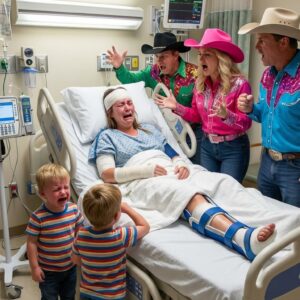
In the fluorescent hush of a hospital ward, the woman who stayed became more than a bystander. She was a hand to hold when monitors screamed uncertainty, a steady presence when medical jargon turned human fear into clinical data. No cameras, no applause—just a quiet choice to anchor someone who was drowning in panic and pain. Her day, her errands, her plans all could have taken precedence, but she chose instead to lend her calm, her time, her simple humanity. That decision, invisible to the world, was everything to the person who couldn’t breathe.
Miles away, April Webster and Nathan Fishbourne were learning how quickly childhood can be eclipsed. At fourteen, they were thrust beneath a spotlight they had never asked for, their private fear turned into public debate. Headlines framed them as cautionary tales, but inside their homes another story unfolded. Parents, grandparents, and siblings closed ranks, not with perfect answers, but with unwavering presence. They drove to appointments, sat through whispered gossip, and held space for grief and confusion. Their support didn’t erase the consequences; it simply refused to let those consequences be borne alone. In both stories, the same truth emerged: heroism is often unremarkable from the outside. It is the ride to the hospital, the seat beside a trembling teenager, the choice to stay when judgment, discomfort, or inconvenience make walking away so much easier.